A Personal Article
Blackadder the 3rd
I couldn’t help but feel that the title of the article sounded like a Blackadder the 3rd Episode, though I’m showing my age here. With episode titles such as Sense & Senility and Ink & Incapability you can see where I’m going with this! Ahem. On to the matter at hand… Death & Disability because…
It’s Disability Pride Month!
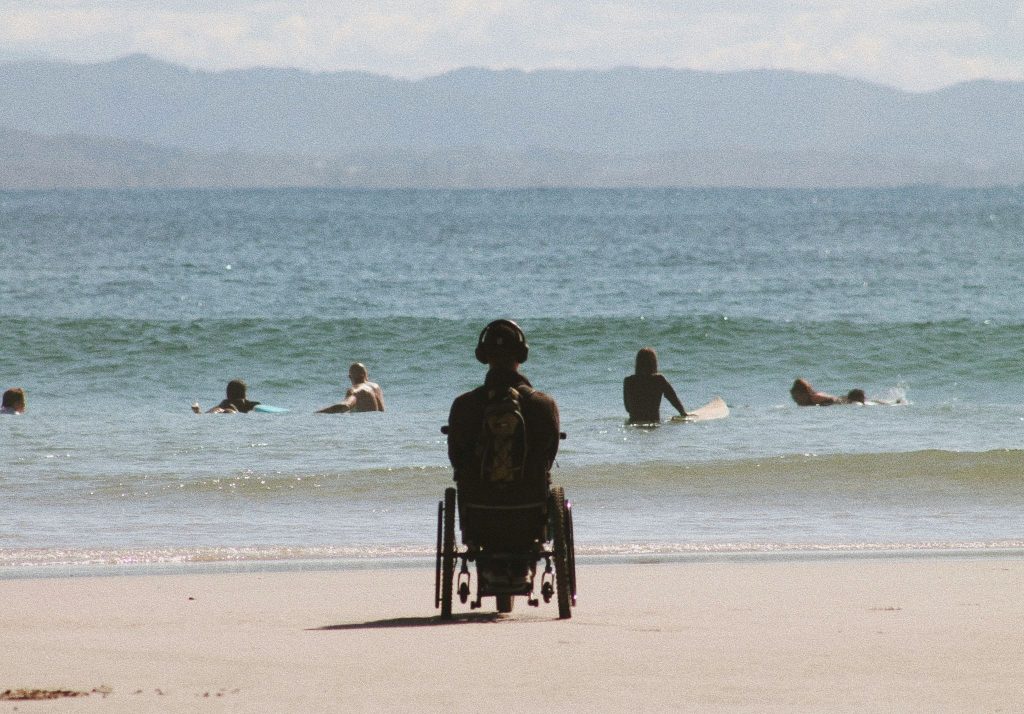
“I’m disabled, and look what I can do. Look at what I’ve overcome to be where I am now.” Katie, Sense. [1]
This is what is meant by ‘Disability Pride’, Katie is 22 years old and she wasn’t born bound to a wheelchair but became disabled in her late teens. Spending her early life dreaming of what she could become, like any other teenager, and proudly states that hasn’t changed, but she has had to adapt.
I love her blunt honesty, saying that Disability Pride isn’t about whooping and cheering about being disabled. It IS about celebrating what you CAN do. Disabled people are tenacious, determined, able and creative and often overlooked.
Disability Rights UK claims that there are 16 million disabled people in the UK [3], and in 2023 the BBC state that one in five people live with a disability, [2] while Scope research shows that “3 in 4 disabled people say they’ve experienced negative attitudes.” [6].
If one in five people live with a disability, it is likely that someone you know or love is living with one. If they had to arrange a funeral, what barriers might they face? What additional difficulties might that bring them on top of the grief?
Disability Pride’s Beginnings
Every July is Disability Pride month. This gives disabled people a voice where they can raise awareness about what it means to be disabled, how they have to fight to be seen and heard, and how so many things non-disabled people take for granted can have an incredible impact on a person with disabilities.
The movement actually started in America in 1990 with the “Americans with Disabilities Act” (ADA) which prevented discrimination against disabled people [2]. Our own Disability Discrimination Act wasn’t passed until 2002, later replaced by the Equality Act in 2010 [2]. Belfast held the first UK parade in 2014 while England didn’t pick up the banner until 2017 [2, 6].
The Disability Pride Flag
The flag was not designed until 2019 by Ann Magill [2, 3] and each colour represents the different disabilities people face [6]. In case the fun colour definition causes problems for those with learning difficulties I have reproduced the list in plain black and white below the colour version.
Red – Represents physical impairments
Gold – Represents Neurodiversity
White – Non-visible and undiagnosed impairments
Blue – Emotional and mental health conditions
Green – Sensory Impairments such as hearing or vision impaired
Charcoal – Represents people who have experienced ableism
- Red – Represents physical impairments
- Gold – Represents Neurodiversity
- White – Non-visible and undiagnosed impairments
- Blue – Emotional and mental health conditions
- Green – Sensory Impairments such as hearing or vision impaired
- Charcoal – Represents people who have experienced ableism
Social Model of Disability and Ableism
Talk to a Disabled person and they are likely to recount the many times they have faced discrimination. Being disabled, or impaired, doesn’t mean that you don’t have value or lack the ability to contribute. The world has so many conditions which make it harder for a disabled person and provide unfair advantages to those who are not disabled.
The Cambridge Dictionary describes Ableism as –
“policies, behaviours, rules, etc. that result in unfair or harmful treatment of disabled people (people who have an illness, injury, or condition that makes it difficult for them to do things that most other people can do) and in a continued unfair advantage to people who are not disabled” [2, 4].
Disability Rights UK define barriers as anything that is in the physical environment, the way other people interact with a Disabled person (such as attitude or communication style), and how organisations and institutions are run [5]. When barriers are torn down Disabled people have more opportunities to experience autonomy, control, choice and independence [5]. Adjustments allow Disabled people to thrive, which is an opportunity every person deserves.
What About Cornwall?
I found Cornwall Council’s Equality, Diversity and Inclusion Strategy 2022-2026 – Summary online while researching this article [7]. When I went back to test the link it failed so I found the article again and replaced the link. If it doesn’t work for you please type in the title and you should be able to find it. There are some interesting strategies and proposals so it is worth taking the time to read.
The following objective supports the use of the Social Model –
| Equality Objectives | Why this Matters |
| To embed the social model of disability across the Council | The Council will look at access to our buildings for the public and staff, using the social model of disability, which says that people are disabled by barriers in society, not by their impairment. |
We can hope that the council delivers on its propositions. Yet it isn’t just about Council buildings, it is about Cornwall as a county and all the businesses within it. If you are interested in Cornwall Specific articles then take a look at my article https://untangled-whispers.co.uk/funeral-costs-in-2026/
Death and Disability
I can hear you asking. “But Kym, what has this got to do with death?”
Disabled people, those with impairments, are not immune to, nor removed from, death and grief. How many people do you know who live with a disability, either visible or hidden? What struggles do they face day to day? How does this impact them when dealing with the death of a loved one?
“We are working towards a world where the barriers we face are dismantled so we do not face exclusion and marginalisation” [3].
Disability Pride and discussions of death and dying are both about opening up conversations around difficult, almost taboo subjects [6]. Very little is discussed about how Disabled people cope with the death of a loved one; emotionally, psychologically or practically. A search of scholarly articles will turn up many studies on the relationship between disabled adults and early mortality (yes, their mortality). Yet no one seems to have researched the impact of death and the dissolution of attachments and bonds, nor the coping strategies of Disabled people, or the barriers which stand in their way.
For the most part Funeral Directors are extremely accommodating and will usually be fully flexible ensuring the inclusion of Disabled people. Crematoriums and cemeteries also try to accommodate Disabled people and new premises are built with accessibility in mind; from T-Loops and ramps, to quiet rooms and screens. However there are some locations where barriers are naturally present such as natural burial grounds, old churches and quaint graveyards.
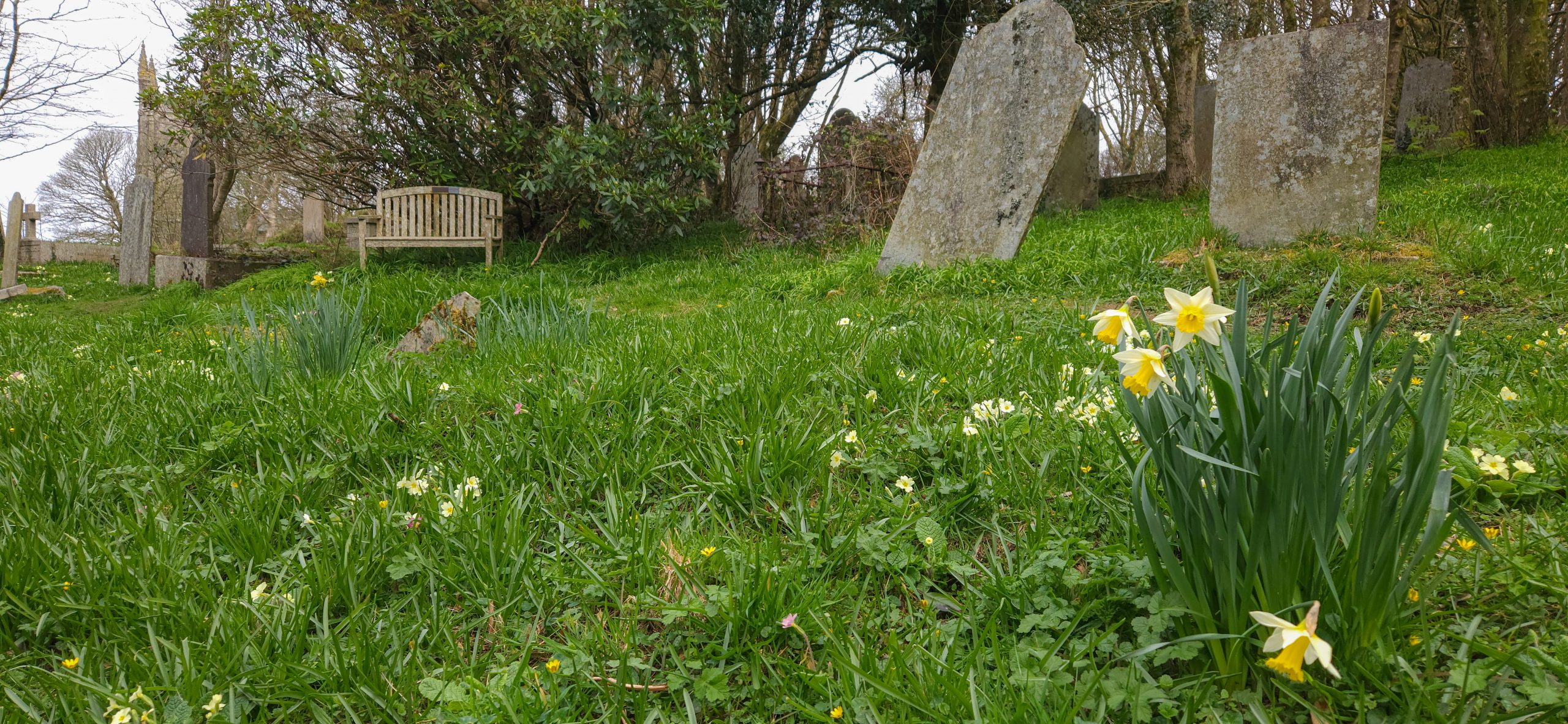
It is really important that the Disabled person feels able to discuss their needs and to have someone advocate for them if necessary. There is a real fear around disclosing needs, of the potential for social stigma or discrimination. Disabled people need to feel and be empowered to make choices through the provision of information, so they know what will work for them, or what they need to adapt, in order to thrive.
Not All Disabilities Are Visible
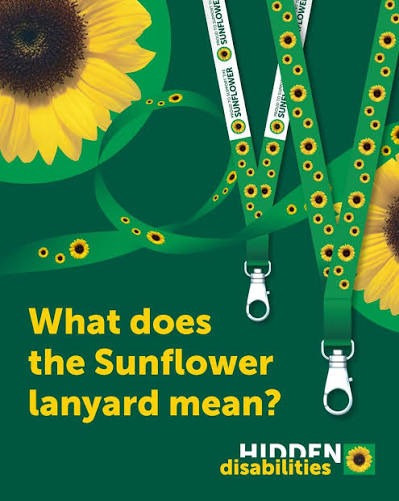
Remember the Disability Pride flag, not all impairments are visible and they are not all physical. Nor are they confined to particular age groups; disability affects young, middle aged and older people alike. I wear the sunflower lanyard [8] and bracelet* as a visual aid so that anyone who sees it knows I might need additional help. Sadly awareness of its meaning is not assured so I encourage you to have open conversations. Wearing visual aids like the lanyard can be great conversation starters! Or you could do what my sister has done and have a special medical bracelet made.
* I am not affiliated with this product in any way and this is not an affiliate link. It is just a link to their page so you can see what options are open to you.
What is my take-away message from this article?
- Disabled people are not disadvantaged by their impairments, they are disadvantaged by barriers in society.
- Always think about ways that you can help to break those barriers and advocate for a Disabled person should they wish it.
- Not all disabilities are visible; be aware of identifying lanyards and bracelets.
- Be clear about what your needs are and what accommodations need to be made when you arrange a funeral. If a Funeral Director doesn’t know, they can’t help.
- I am disabled. It is incredibly difficult to break through ableism and societal barriers, don’t face this alone. If you think I can help please reach out.
Are you a Disabled person? What have been your experiences? How have you broken through barriers and how has this affected you in a time of grief? I would love to know of your experiences, negative or positive.
References
- This Disability Pride Month, I’m showing people what I can do. (2024) ‘Scope’ Available at: https://www.sense.org.uk/blog/this-disability-pride-month-im-showing-people-what-i-can-do/(Accessed 06/07/2026)
- Anon. (2023) ‘What is Disability Pride Month?’ Available at: https://www.bbc.co.uk/newsround/66256333 (Accessed 06/07/2026)
- Disability Rights UK. (2026) ‘Disability Pride Month: Resistance in Action.’ Available at: https://www.disabilityrightsuk.org/news/disability-pride-month-resistance-action?srsltid=AfmBOopd7Jjb-CfeJoO5yoKSfunhPIozQFgUVURULW3N_pPQ6kLR3ga5 (Accessed 06/07/2026)
- Cambridge University Press. (2026) ‘Ableism’ Available at: https://dictionary.cambridge.org/dictionary/english/ableism (Accessed 06/07/2026)
- Disability Rights UK. (2026) ‘Social Model of Disability: Language.’ Available at: https://www.disabilityrightsuk.org/social-model-disability-language (Accessed 06/07/2026)
- Scope. (2026) ‘Disability Pride Month.’ Available at: https://www.scope.org.uk/disability-pride-month#:~:text=We%20celebrate%20Disability%20Pride%20Month,come%20together%20as%20a%20community (Accessed 06/07/2026)
- Cornwall Council (2026) ‘Equality, Diversity and Inclusion Strategy 2022-2026 – Summary.’ Available at: https://ehq-production-europe.s3.eu-west-1.amazonaws.com/02c9620e4d5daf3112b910845ad1075a20202bac/original/1655376397/142c972a473c7951ee7bbb3f1cb5d47e_EDI_Strategy_Summary.pdf?X-Amz-Algorithm=AWS4-HMAC-SHA256&X-Amz-Credential=AKIA4KKNQAKIPIPQP5NM%2F20260706%2Feu-west-1%2Fs3%2Faws4_request&X-Amz-Date=20260706T144418Z&X-Amz-Expires=300&X-Amz-SignedHeaders=host&X-Amz-Signature=44c945d7ca123559de21fec52f0b534b3d512f0efb609256448eb9b58c86fa7f (Accessed 07/07/2026)
- Hidden Disabilities Sunflower Scheme Limited. (2026) ‘Shop.’ Available at: https://hdsunflower.com/uk/shop.html?gad_source=1&gad_campaignid=22559345945&gbraid=0AAAAACSJn386SGuVUgWohi_ky95bRhDKP&gclid=CjwKCAjwpK3SBhASEiwAtV1SPDpebcDG8Ae_q06nGG0vTpunmJX82TuAIymZhemXN_wzQ6gVvwNL0hoC_wUQAvD_BwE (Accessed 07/07/2026)